
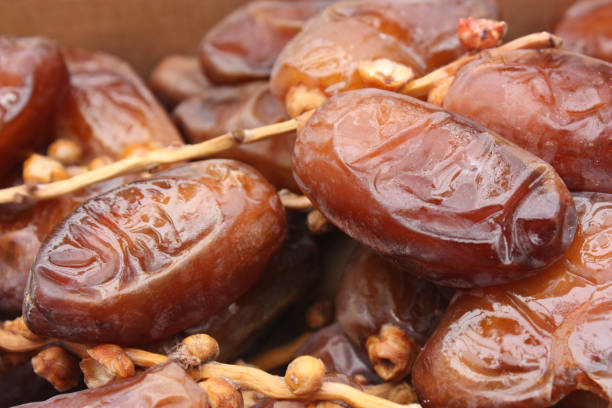
Kurma tangkai is dates still attached to the stem, sold as a bunch instead of loose in a box — Deglet Noor is one of the varieties commonly sold this way. For a pemborong kurma the appeal is display, not shelf life — a stem full of glossy dates sells itself on a table at a bazaar Ramadan, where loose dates in a plastic tub don't.
The stem changes how you buy it, though. A tangkai bunch is sold by weight, and the stem itself weighs something — anywhere from 30g to over 100g on a large bunch, depending on variety. Two bunches that look similar in size can differ RM3-5 in price purely because one has a heavier stem. If you're buying wholesale, ask the supplier for stem-stripped weight, not just bunch weight, before you settle on a per-kg price. Otherwise you're paying date prices for wood.
Where the Ramadan demand actually comes from
Tangkai sells hardest in the two to three weeks before Ramadan starts, and again just before Hari Raya. It's a gifting and decoration item during that window — bunches go into hampers, get hung at open houses, or sit on a table as a centrepiece. Outside those windows, demand for tangkai drops off fast and most buyers go back to loose kurma or boxed varieties like Medjool or Mariami, which travel and store better.
That seasonality is why a lot of small kedai kurma don't stock tangkai year-round — they order it as a one-off batch two to three weeks ahead of Ramadan and sell through it before the stems dry out and start dropping fruit.
What to check before buying tangkai in bulk
A few things matter more here than with loose dates:
The stem should still be flexible, not brittle. A dry, snapping stem means the bunch has been sitting for a while and fruit will start falling off during transport. Check the fruit-to-stem ratio too — a bunch stripped bare in patches has already lost stock in handling, and you're paying full weight for a bunch that's partly empty stem.
Storage is shorter than loose kurma. Once cut, a tangkai bunch holds its condition for roughly a week at room temperature before the dates start drying out unevenly or dropping. If you're buying for resale rather than same-week display, keep bunches somewhere cool and out of direct sun, and don't stack them — the weight of bunches on top crushes the fruit underneath.
Pricing it as a wholesaler
Because tangkai carries a display premium, it's usually priced 15-25% above the equivalent loose date by weight — the stem, handling, and shorter shelf life all get built into that. If a supplier quotes you tangkai at the same per-kg price as loose kurma, that's worth a second look: either the stem weight isn't being deducted, or the fruit grade is lower than what you'd expect for the price.
For grading and current per-kg pricing across the varieties we carry, see our kurma harga guide.