
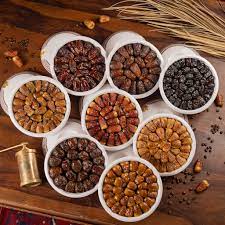
Buying dates by the case, the carton, or the pallet is a different game from picking up a single box at the supermarket. When you borong kurma pukal — purchasing dates in genuine wholesale volume — the questions that matter shift away from "which variety tastes best" and toward margins, shelf life, packaging integrity, and reliable resupply. Whether you run a grocery outlet (kedai runcit), operate as a regional stockist, or are building a small reselling business ahead of Ramadan, the economics of bulk buying can make or break your season. This guide walks traders, retailers, and stockists through everything that goes into a smart bulk dates purchase in Malaysia — from reading a wholesale price sheet correctly, to grading and packaging, to storage and turnover.
Why Buy Dates in Bulk at All?
The simplest reason is unit cost. A pallet-level or carton-level price is materially lower per kilogram than the retail price, and that gap is exactly where a reseller’s margin lives. But cost is only the first of several advantages that come with buying volume from a serious wholesaler rather than topping up from retail shelves.
- Predictable supply during peak demand. Dates are seasonal in demand, with a sharp spike around Ramadan and the festive months. A bulk agreement locks in stock before the rush, when retail supply tightens and prices climb.
- Consistency of grade and origin. When you commit to a carton lot from a single supplier, you get fruit of the same harvest, the same grade, and the same moisture profile — which matters when customers expect the box they bought last week to match the one they buy today.
- Better packaging options. Wholesale lots arrive in formats designed for handling and resale: 5 kg or 10 kg bulk cartons, vacuum-sealed inner bags, or pre-portioned retail packs you can shelve directly.
- Room to negotiate. Volume buyers earn terms that retail simply cannot — tiered pricing, mixed-variety pallets, and in some cases delivery included.
For a deeper look at how Malaysian retailers stock their shelves and where local and imported fruit sit side by side, our guide on Malaysian Kurma: local gems and imported delights is a useful companion to this one.
Understanding Wholesale Date Grading
Before you can compare two quotes honestly, you need to understand what you are actually comparing. Two cartons of the same variety can differ in price by a wide margin, and the reason is almost always grading. Grade is a function of several physical attributes, and reputable suppliers will state them clearly.
Size and Count
Larger fruit commands a higher price. Many varieties — Medjool especially — are sold by count per kilogram, where a lower count (fewer, bigger dates per kilo) signals a premium grade. When a price sheet lists "Jumbo," "Large," or a count band, that classification is doing real work, and a cheaper carton with a higher count is not necessarily a worse deal — it just serves a different shelf.
Moisture and Texture
Dates range from soft and moist to semi-dry and firm. Moisture affects both eating quality and shelf life: softer fruit is prized for freshness but needs cooler storage and faster turnover, while drier grades travel and keep better. Knowing your customer base tells you which texture profile to stock in volume.
Appearance and Cleanliness
Skin integrity, absence of crystallised sugar bloom, uniform colour, and freedom from foreign matter all factor into grade. For a stockist supplying other shops, clean, presentable fruit is not a luxury — it is what protects your reputation down the chain.
If grading feels opaque, it is worth reading how prices are actually built up. Our explainer on the price of Medjool dates breaks down why one premium variety can sit at several multiples of an everyday grade.
Local Harvest or Imported Lot: Where Your Bulk Stock Comes From
Wholesale dates in the Malaysian market arrive from two broad sources, and the distinction shapes both price and how you sell. A meaningful share of premium volume is imported — Medjool, Safawi, Ajwa, and other named varieties travel from established date-growing regions and carry the grading conventions of their origin. Alongside these sit lots that are processed, blended, or repacked closer to home. Neither is inherently better; they serve different shelves and different buyers.
What matters for a bulk buyer is transparency. A supplier who can tell you the variety, the origin, the harvest window, and the grade is giving you the information you need to price and position the stock honestly. Vague labelling — "assorted dates," no origin, no grade — is a warning sign, because it usually means inconsistent fruit that will be hard to sell at a stable price. When you buy volume, you are buying predictability as much as you are buying fruit, and predictability starts with knowing exactly what is in the carton.
Packaging Formats and What They Cost You
The format your dates arrive in is not a detail — it directly affects your handling time, your storage footprint, and how the fruit presents on the shelf. Loose bulk in large cartons is the cheapest per kilogram, but it demands clean repacking space and food-safe materials if you intend to sell smaller units. Inner-bagged cartons strike a balance, protecting the fruit from humidity while still giving you flexibility. Shelf-ready retail packs cost the most per kilogram but let a busy kedai runcit move stock straight from carton to shelf with no extra labour. Decide which trade-off fits your business before you compare prices, because a cheap loose-bulk quote stops looking cheap once you cost in the hours and materials needed to make it sellable.
Reading a Wholesale Price Sheet Like a Trader
A bulk quote is rarely a single number. Learn to read every line, because the headline price per kilogram is only the start.
- Price tiers. Most wholesalers publish stepped pricing — one rate for a few cartons, a lower rate per pallet, a lower rate still for a full container. Identify the tier your volume genuinely reaches; do not over-order chasing a discount you cannot sell through.
- Minimum order quantity (MOQ). The MOQ defines the floor of a wholesale relationship. A high MOQ can be a barrier for a new kedai runcit, so it pays to find a supplier whose entry tier matches your turnover.
- Packaging format. Confirm whether the quoted price is for loose bulk, inner-bagged cartons, or shelf-ready retail packs — the format changes both your handling cost and your resale presentation.
- Delivery terms. Is freight included, or quoted separately by zone? For Sabah and Sarawak especially, delivery can be a meaningful share of landed cost.
The single most useful habit a bulk buyer can build is to always compute landed cost per kilogram — product, packaging, and freight combined — rather than reacting to the headline figure. A slightly higher product price with free delivery often beats a cheap quote that adds freight at the end.
Matching Stock to Your Business Type
The right bulk strategy depends entirely on who you are in the supply chain.
The Grocery Retailer (Kedai Runcit)
A neighbourhood shop wants a manageable MOQ, shelf-ready packaging, and a tight, fast-moving range — typically two or three reliable everyday varieties plus one premium line for gifting. Turnover beats variety here; a small shop that stocks twelve varieties thinly will lose fruit to spoilage long before it sells through.
The Reseller and Online Trader
Resellers thrive on margin and presentation. Buying loose bulk and re-portioning into branded retail packs lets you capture the value-add yourself, but it demands clean handling space and food-safe packaging. Strong supplier support matters here too — our note on the customer service support of a kurma supplier explains why responsiveness is worth paying for when you are building a brand on top of someone else’s fruit.
The Regional Stockist
A stockist buys at pallet or container scale and supplies other shops. Here, consistency of grade, batch traceability, and storage capacity are everything. The stockist’s reputation depends on every downstream shop receiving fruit that matches the sample, so single-origin, single-grade lots are preferable to mixed cartons.
Storage, Shelf Life, and Stock Rotation
Buying well is only half the job; storing well protects the margin you negotiated. Dates are forgiving compared with fresh produce, but volume amplifies any storage mistake.
- Keep it cool and dry. A cool, dry, dark store slows sugar crystallisation and preserves texture. Softer, high-moisture grades benefit from chilled storage, while drier grades tolerate ambient conditions better.
- Seal against humidity and pests. Malaysia’s humidity is the enemy of open cartons. Keep inner bags sealed until a carton is opened for sale, and store pallets off the floor.
- Rotate first-in, first-out. Date older stock and sell it first. Disciplined rotation is what keeps a bulk position from quietly turning into write-offs.
- Buy to your sell-through rate. The cheapest carton you never sell is the most expensive one you ever bought. Size each order to what you can realistically move before quality drifts.
For the basics on how fresh and dried forms differ in keeping quality — which directly shapes how much of each you should hold — see our piece on fresh versus dried buah kurma.
Building a Relationship With a Reliable Wholesaler
The best bulk buyers do not chase the lowest quote every season; they build a relationship with a supplier who is consistent, transparent about grade and origin, and responsive when something goes wrong. A dependable wholesaler will let you sample before committing to a pallet, will tell you honestly which lots are peaking and which are best held, and will give you advance notice as the festive squeeze approaches.
If you are comparing suppliers across the region, it is worth looking beyond a single market. Our sister operation at Kurma Borong covers wholesale sourcing and variety selection in more depth, and is a good reference point when you are benchmarking grades, formats, and terms before you commit to a season’s stock.
Penghantaran ke Indonesia: Mencari Grosir Kurma Rentas Sempadan
Tidak semua peniaga membeli pukal dalam pasaran Malaysia sahaja. Sebahagian stokis dan pengedar turut meninjau bekalan dari negara jiran untuk membandingkan gred, harga, dan ketersediaan musim. Bagi pembeli yang ingin menilai pilihan di Indonesia — sama ada untuk perbandingan harga atau peluang import — rakan rangkaian kami yang menyediakan perkhidmatan grosir kurma di Indonesia merupakan titik rujukan yang berguna untuk memahami format pembungkusan, gred, dan terma penghantaran rentas sempadan. Memahami bagaimana pasaran berbeza menetapkan harga dan menggredkan kurma membantu peniaga Malaysia berunding dengan lebih bijak di pasaran tempatan.
Frequently Asked Questions
What is a realistic minimum order to start buying dates wholesale?
It varies by supplier, but many wholesalers set an entry tier at the carton level (commonly 5 kg or 10 kg cartons) rather than requiring a full pallet. A new kedai runcit should look for a supplier whose minimum order quantity matches its real weekly turnover, then step up to pallet pricing only once sell-through is proven. Over-ordering to reach a discount tier you cannot clear is the most common bulk-buying mistake.
How long do dates keep when bought in bulk?
Keeping quality depends on the variety and its moisture level, plus your storage conditions. In general, dates are far more shelf-stable than fresh produce: kept cool, dry, sealed, and out of humidity, drier grades hold well over an extended period, while softer, high-moisture grades are best chilled and turned over faster. The practical rule is to buy to your sell-through rate and rotate first-in, first-out so older stock always moves first.
Should I stock one variety in volume or a mixed range?
It depends on your customers. A small grocery outlet usually does best with two or three fast-moving everyday varieties plus one premium gifting line, because deep variety thinly stocked tends to spoil before it sells. A stockist supplying other shops, by contrast, benefits from single-origin, single-grade lots so that every downstream buyer receives fruit that matches the sample. Match the breadth of your range to how fast you actually move stock, not to how the shelf looks.
Buying dates in bulk rewards traders who treat it as a discipline rather than a one-off purchase: read the grade, compute the true landed cost, store with care, rotate strictly, and build a relationship with a wholesaler you can trust season after season. Do that, and the margin that lives between wholesale and retail becomes a dependable part of your business rather than a seasonal gamble.