
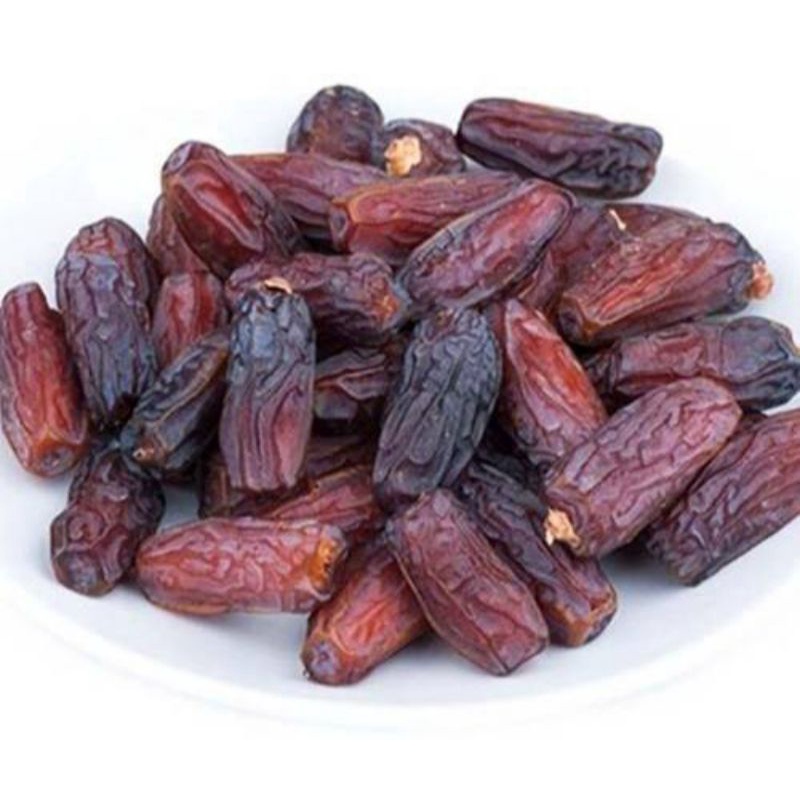
Buah kurma is where most of the fresh-vs-dried confusion actually starts: for a bulk order, the two are not two grades of the same product, they're two different logistics problems. Fresh (rutab-stage) dates need a chiller from the farm to your warehouse door and a sell-through window measured in weeks. Fully dried kurma sits in a dry store for a year and doesn't care if your delivery truck is late. For anyone placing a fresh or dried dates order in real quantity — a caterer, a hamper assembler, a grocer stocking for the festive rush — that difference decides your margin more than the price on the invoice does.
Why dried is the default bulk pick
Moisture is the enemy of a bulk order. A carton of rutab-stage dates loses condition the moment the cold chain breaks, and a broken cold chain is the single most common cause of stock write-offs we see reported back from resellers. Dried kurma, by contrast, ships ambient and holds its grade for months. That's why almost every trader building volume around our wholesale guide for traders, grocers and stockists defaults to dried stock first and treats fresh as a specialty add-on, not the other way round.
The waste-rate math is blunt. A grocer who over-orders dried kurma can usually still sell it three months later at a small discount. A grocer who over-orders fresh rutab is looking at spoiled stock inside two to three weeks, full price, no second chance. Unless you have a chiller and a fast enough turnover to clear it, fresh is a liability sitting in your storeroom.
When paying the fresh premium is worth it
Fresh-stage kurma earns its place in one category: premium hampers and corporate gifting, where the buyer is paying for the plump, glossy look rather than shelf stability. A Raya hamper assembler ordering three weeks ahead of a delivery date can justify the chiller cost and the tighter sell-by window, because the fresh stock is gone before it has time to spoil — it's built into a finished box, not sitting loose on a shelf. Outside that use case, the fresh premium rarely pays for itself; the product looks better for about ten days and then you're managing markdowns.
If you do go fresh for a hamper run, order against a confirmed delivery date, not a forecast. Ask your supplier for the harvest or pack date, not just a "fresh" label — a rutab batch that's already a week old on arrival gives you almost no working window left.
Reading the price difference correctly
Dried kurma's per-kg price looks higher on some invoices simply because the drying process removes water weight — you're buying more fruit solids per kilogram, not paying more for the same amount of date. When you're comparing quotes, ask what stage the price is quoted at; a fair comparison needs both figures normalised to a landed cost per kilogram of actual usable product, not the shelf price alone. Our Medjool pricing breakdown and the date prices and grading systems guide both walk through how grade and moisture content move the number, which matters more for your margin than fresh-versus-dried on its own.
A simple rule for a first bulk order
Start dried. Build your baseline stock, your storage routine and your regular customers around a product that forgives a slow week. Add fresh only once you have a specific, dated use for it — a hamper contract, a festive pop-up, an order you know will clear inside the window. That sequencing keeps the risk on the smaller, planned order instead of the bulk one.