
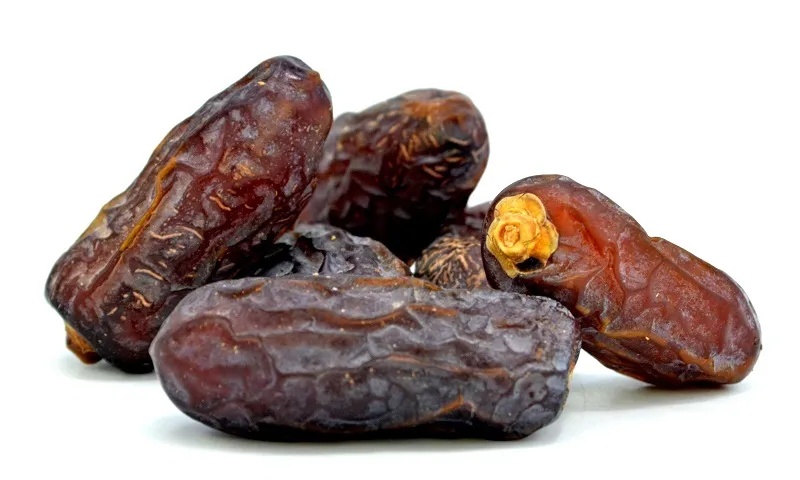
Kurma Mariami AA belongs in savoury cooking too
Most people only meet Kurma Mariami AA at Raya, sitting next to kuih on a tray. That's a waste of a date this dark and this soft. Mariami comes from the Piarom family grown in southern Iran, harvested and semi-dried until the flesh turns almost black and the skin wrinkles slightly. The sugar is concentrated, not sharp — closer to molasses or dark caramel than to plain sweetness. That's exactly the profile a cook wants next to salt, acid, and fat.
Why the texture matters more than the sweetness
Grade AA Mariami is soft enough to mash with a fork but firm enough to hold its shape when stuffed or sliced. Cheaper, drier grades crumble when you try to work with them in the kitchen — they're fine for snacking, wrong for cooking. If a recipe calls for the date to melt into a sauce or hold together as a filling, AA grade is the one to buy, not the standard grade sold loose by the kilo. Traders sourcing in volume should read our guide to choosing a variety for a first bulk order before committing to a grade across an entire shipment.
Dishes worth trying
Stuffed Mariami with a sliver of goat cheese and a toasted walnut half is the easiest starting point — fifteen minutes, no cooking required. For something heavier, blend a handful of pitted Mariami with tamarind pulp, a little chilli, and lime juice to make a glaze for grilled lamb chops or chicken thighs; the dates caramelise fast under heat, so brush it on in the last five minutes, not at the start. A rice pilaf with chopped Mariami, toasted almonds, and a stick of cinnamon does the same job as the raisins in a biryani, but with more depth. None of these need sugar added — the date is already doing that work.
Storing it before you cook
Keep Mariami AA in an airtight container in the fridge rather than on the counter; the higher moisture content that gives it that soft bite also makes it spoil faster than dry Ajwa or Deglet Noor at room temperature. Pitted dates destined for a glaze or chutney can go straight into the blender cold — no need to soak them first, unlike drier varieties.
Pairing it with other kurma
If Mariami is the soft, cooking-friendly end of the range, the firmer kurma tangkai sold on the branch is better suited to snacking straight from the box or for hampers where you want the fruit to hold its shape for weeks, not days. Buying both gives you one date for the kitchen and one for the tray — they're not interchangeable, and that's the point. For restaurants and grocers buying in pallet quantities, see our wholesale guide to bulk kurma orders for how grade mix affects pricing at scale.