
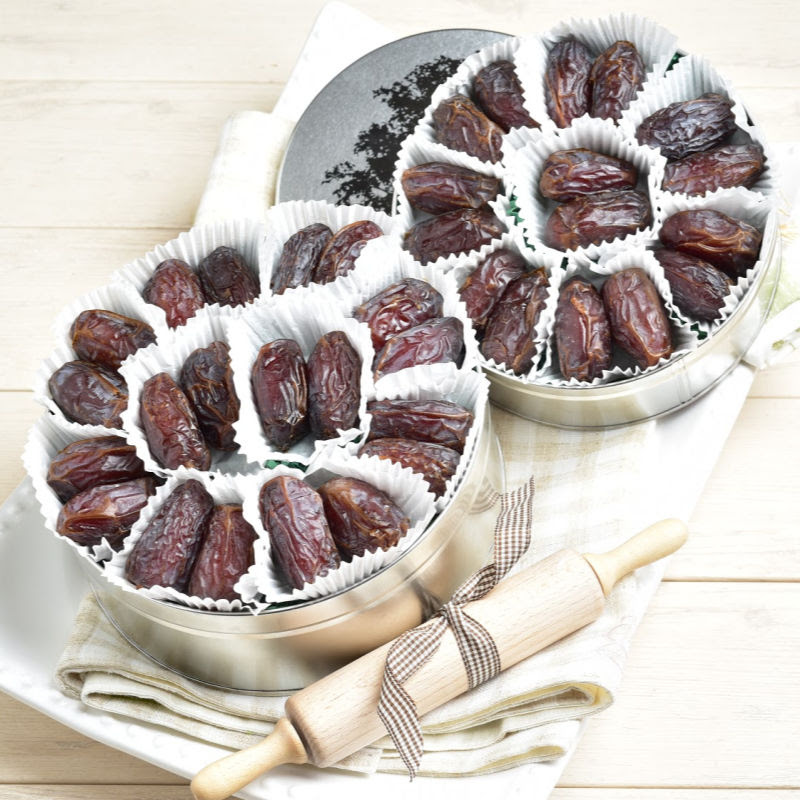
Medjool gets called the "king of dates" so often that the phrase stops meaning anything. Here is what actually separates a good Medjool from a mediocre one, and where it fits next to the dried fruit already sitting in most Malaysian pantries — kurma kering, raisins, dried apricot, dried mango.
What size and softness actually tell you
Medjool is graded mainly by size — Jumbo, Extra Fancy, Fancy, Select — and by moisture. A fresher, higher-moisture Medjool feels almost sticky between the fingers and the skin barely holds together; a drier one (still perfectly fine to eat) firms up and keeps longer without refrigeration. If a batch feels dry and slightly crystallised on the outside, that is sugar migrating to the surface, not spoilage — but it does mean the sweetness will taste sharper rather than caramel-soft.
Where it comes from changes the eating experience
Medjool dates are grown commercially in the Jordan Valley, in Palestine, and increasingly in California's Coachella Valley. Californian Medjool tends to run larger and more uniform because of controlled irrigation; Jordan Valley and Palestinian fruit varies more year to year with the season, and buyers who taste both side by side usually notice a deeper, less sugary sweetness in the Middle Eastern fruit. Neither is "better" across the board — it depends whether you want consistency or character.
Medjool against the rest of the dried fruit shelf
Raisins and dried cranberries are a different category entirely: smaller, tarter, and eaten by the handful rather than one at a time. Dried apricot sits closer to Medjool in how it's eaten — as a standalone piece — but has a firmer bite and a sourness Medjool doesn't have. None of this makes Medjool "healthier" or "worse" than the others; it makes it a different texture for a different moment. Buy Medjool when you want a single soft, sweet piece to slow down and eat properly. Buy raisins or cranberries when you want something to mix into baking or granola.
Buying and storing it well
Keep Medjool in an airtight container, not the original punnet left open in a warm kitchen — that's the fastest way to dry it out or invite ants. In a sealed container at room temperature it holds for a few weeks; in the fridge, considerably longer, and the fruit softens slightly less over time than exposed to air. For gifting or hantaran, choose the larger, glossier pieces and keep them chilled until the day itself — they firm up when cold and soften back to their proper texture within an hour at room temperature.
For a closer look at how pricing tracks size and origin, see our breakdown of Medjool pricing and the wider grading guide for dates sold in Malaysia. If you're comparing Medjool specifically against Palestinian-grown fruit, this piece on taste and ripeness goes deeper on that comparison. For bulk or wholesale quantities, reach out to us directly.