
Beyond Medjool: dates worth seeking out
Most buyers in Malaysia know two names: Medjool and Deglet Noor. That leaves a long list of varieties most people never taste, even though they turn up regularly in Gulf and North African markets. Barhi, Khalas, Sukkari and Hayani are grown at real scale in Iraq, Saudi Arabia, the UAE and Egypt — they are simply not exported as widely, so stock here is thinner and prices move around more than with the ever-popular Kurma Majol.
Four varieties and what actually sets them apart
- Khalas, from the UAE and eastern Saudi Arabia, is medium-sized with a golden-brown skin. The sweetness is balanced rather than heavy, with a faint citrus note that Medjool doesn’t have. Texture is soft but holds together, which is why it's often eaten on its own rather than stuffed.
- Sukkari comes mainly from Al-Qassim in Saudi Arabia. Light amber, almost translucent skin, and a flavour people describe as closer to honey than caramel. It bruises easily in transit, which is part of why it's pricier and harder to source in bulk outside the Gulf.
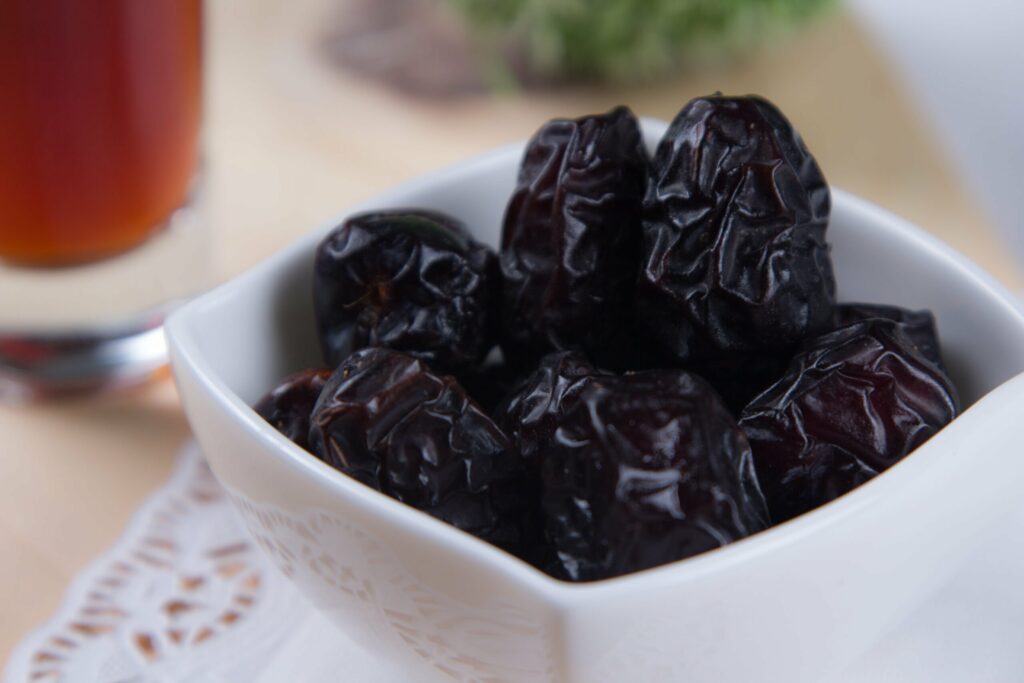
- Hayani (also spelled Hayany) comes from Egypt, where it's one of the country's main soft-date cultivars. Dark reddish-brown to almost black skin, moist flesh, and a sweetness that's milder than Medjool's. Unlike the semi-dry varieties on this list, Hayani is usually eaten soft, closer to a fresh date than a dried one.
- Barhi is unusual because it's sold and eaten at the khalal stage, when it's still yellow and crunchy, not just at the fully ripe tamar stage most dried dates reach. Fresh Barhi tastes almost like an apple with date sugar; once fully ripe and dried it turns soft and caramel-heavy like other varieties.
None of these compete directly with Mariami on flavour — Mariami's soft, almost syrupy texture is its own category. What the rarer varieties offer is range: a drier chew for snacking, a soft bite for eating fresh, a milder sweetness for someone who finds Medjool too rich.
Why grading matters more than the variety name
A Grade A Khalas and a Grade B Khalas from the same farm can taste noticeably different — size, moisture and how much the fruit was handled before drying all show up in the final texture. Our guide to date prices and grading in Malaysia breaks down what A / AA / AAA actually means at the point of sale, which matters more for these lesser-known varieties than for Medjool, where most buyers already know what they're getting.
Where to start
If you've only had Medjool and Deglet Noor, Khalas is the easiest entry point — it's close enough in sweetness that the difference is texture, not a shock in flavour. From there, Sukkari and Hayani sit at opposite ends: one dry and honeyed, one soft and mild. We've also written about Safawi, another variety worth comparing if you're building out a range rather than sticking to one type. Check current stock and pricing on our homepage before placing a bulk order, since availability on the less common varieties shifts by season.