
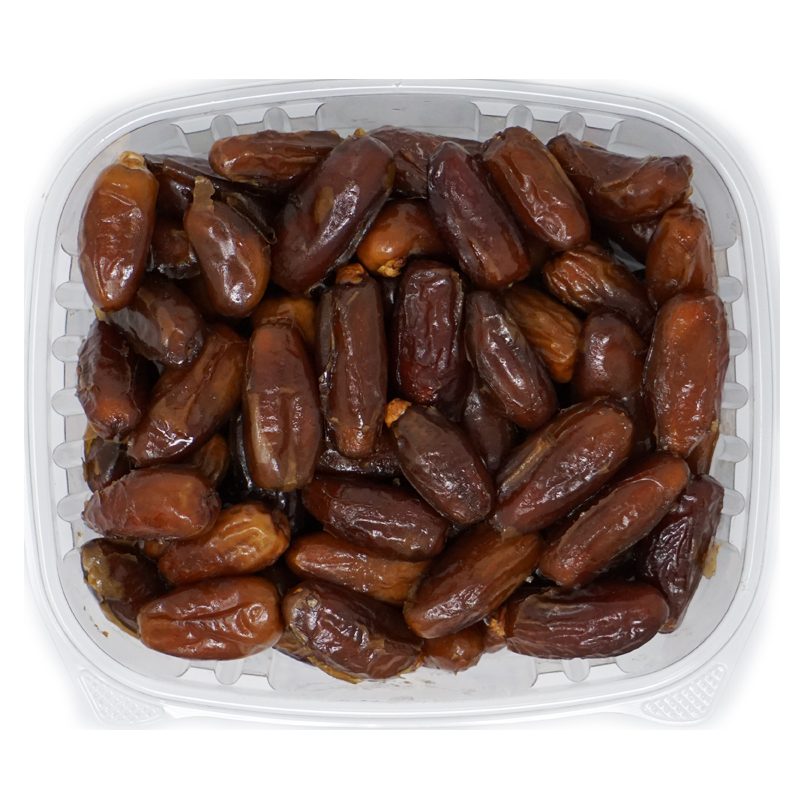
Stocking kurma tangkai as a reseller: what changes versus loose dates
Kurma tangkai — dates sold with the stem attached, packed in small clusters rather than loose — brings a different set of problems for a wholesale buyer than boxed loose dates do. The clusters are bulkier per kilogram, they bruise more easily in transit, and the stem itself has a shelf life: once it dries past a certain point it snaps off, and a broken stem drops the box down a grade even if the fruit underneath is fine. Deglet Noor tangkai is the variety most Malaysian distributors carry on the stem, and it's worth ordering a small trial batch before committing to a full pallet, precisely because breakage rates vary a lot between suppliers.
What to ask a distributor before placing a wholesale order
Packaging format matters more here than with loose dates. Ask whether clusters ship in rigid trays or soft bags — soft bags are cheaper but the stems knock against each other in transit and breakage climbs. Ask for a breakage-rate figure from the last batch they shipped, not just a promise of "premium quality"; a distributor who tracks this number is usually the one worth reordering from.
Minimum order quantity is the other variable that catches new resellers off guard. Tangkai dates are priced and packed in smaller case sizes than loose dates because of the bulk, so a "carton" from one supplier might hold half the weight of a carton from another — always confirm net weight per case before comparing a quoted price, not the price per case.
Turnover speed is worth pressing on too. A distributor who moves tangkai stock through in under six weeks is shipping freshly packed clusters; one who's been sitting on the same lot for two months is the reason a reseller sometimes gets a shipment with dried, cracked stems on arrival even though the paperwork says "fresh."
Where the margin actually sits
Tangkai dates carry a retail premium over loose dates of the same variety — partly for the labour of hand-selecting intact clusters, partly because the bulkier packaging costs more to ship and store. For a reseller, that premium is the reason to stock tangkai at all: margin per kilogram is usually better than loose dates, provided breakage during transit and storage stays low. A distributor who can quote a delivered price with a firm breakage allowance built in is doing the math for you already; one who can't is passing that risk onto your stockroom.
Sourcing and quality control both sit upstream of the reseller. A distributor who works directly with growers rather than through several middlemen is generally shipping fresher stock and can tell you, when asked, which farm or harvest window a batch came from — that traceability is also what lets a reseller answer a customer's question about origin with a real answer instead of a guess. Distributors selling high-quality dates at scale tend to apply the same sourcing discipline across their whole catalogue, tangkai included.
Getting stock into retail once it lands
Getting kurma tangkai in front of buyers takes more channels than a single storefront. Pasar malam stalls move it fast during the run-up to Ramadan, specialty dried-fruit shops carry it year-round at a slower pace, and supermarket listings need consistent supply to justify shelf space — a distributor who only services one of these channels well is limiting how fast a reseller can turn stock. It's also worth reviewing current wholesale pricing across varieties before locking in a tangkai order, since the price gap between tangkai and loose dates shifts with the season and isn't always worth paying if your customer base doesn't specifically ask for the stem.
Before you commit to a first order
- Request a sample carton and check breakage rate against what was promised.
- Confirm net weight per case, not just the case price, when comparing grades and pricing between suppliers.
- Ask about turnover speed — how long stock typically sits before it ships to you.
- If you're new to wholesale sourcing generally, it's worth a broader look at how kurma suppliers in Malaysia operate before narrowing down to tangkai specifically.