
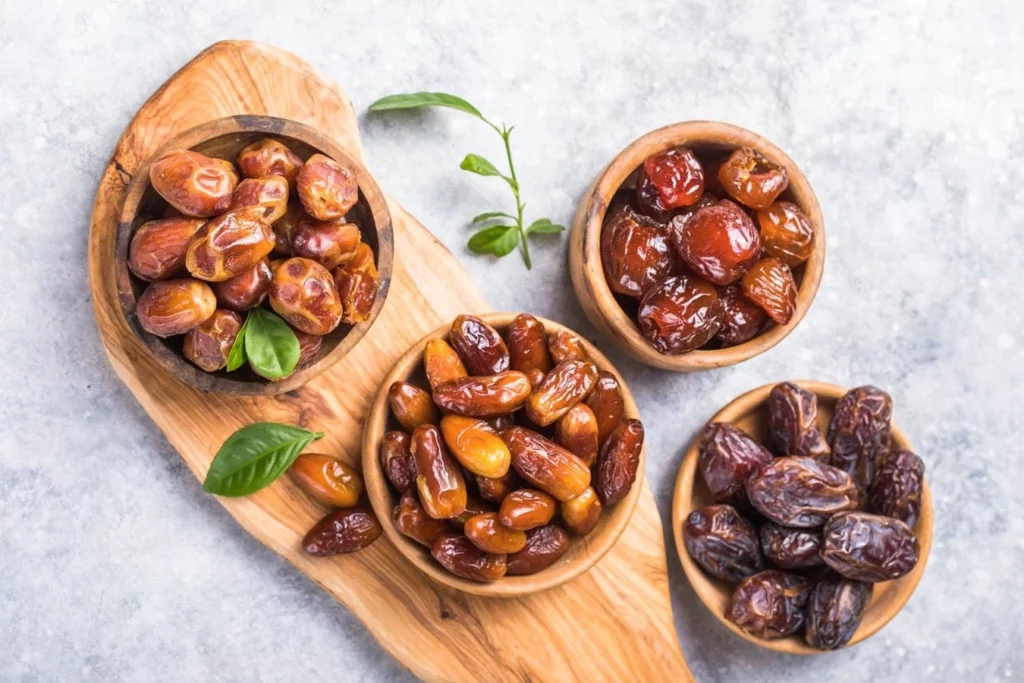
What "kurma supplier" actually means in Malaysia
Most of what's sold as loose kurma in Malaysia comes in through a handful of import channels: Saudi ports for Ajwa and Safawi, Iranian shippers for Mariami and Piarom, and North African trade for Deglet Noor. A kurma supplier in Malaysia is really just the layer between that import chain and your kitchen or your shelf — and the gap between a good one and a bad one shows up fastest in three places: the harvest date on the box, how the stock was kept between the port and your order, and whether the grading on the label matches what's actually inside.
Reading a supplier's stock sheet
A wholesale price list that only says "Medjool RM35" is missing half the story. Ask which grade — Jumbo, Super, or Special — because the same variety can span a RM10-15 gap per kilogram depending on size and skin condition. Ask for the crop year too. Dates don't spoil the way fresh fruit does, but a two-year-old batch sold as "fresh harvest" is a red flag on its own, independent of taste.
Origin and why it's on the label
Origin isn't a marketing detail. Ajwa is grown almost exclusively around Madinah; a supplier claiming Ajwa from anywhere else is either mislabeling a similar-looking variety or padding the batch with a cheaper stand-in. Mariami and Piarom come out of Iran's Bam and Saravan regions — cross-check the country of origin printed on the carton against what the seller tells you over WhatsApp. It should match, every time.
Storage tells you more than the price does
Dates held at room temperature in an un-air-conditioned warehouse through a Malaysian wet season will sugar out — the white bloom that forms when moisture draws sucrose to the surface. It's not dangerous, but it means the stock has been sitting somewhere warm for a while. A supplier who keeps cartons in a chiller and rotates stock will hand you dates that are still supple, not stiff at the edges. If you're buying for resale, ask to see the storage area, or at minimum ask how often they turn over inventory — a supplier moving 500kg a week is handling fresher stock than one moving 50kg a month.
Wholesale vs. retail buying — different questions apply
If you're buying a kilogram for the house, taste and price are the whole decision. If you're buying for resale as a trader or grocer, the questions change: minimum order quantity, whether the supplier can guarantee the same grade across repeat orders, and payment terms for standing accounts. A supplier who can't tell you their MOQ off the top of their head usually isn't set up for regular wholesale — they're retailing in bulk, which is a different business with different reliability.
Documentation worth asking for
Halal certification (JAKIM or an equivalent recognised body) should be available on request, not just claimed. For imported stock, a supplier who can produce the import permit or at least name the port of entry is generally handling proper channels rather than grey-market repacking. None of this is exotic — it's the same due diligence you'd run on any imported food ingredient, dates included.
What this looks like in practice
A buyer sourcing for a Ramadan bazaar stall doesn't need the same supplier relationship as a hotel kitchen ordering Medjool year-round for pastry work. The bazaar stall wants variety and a good story per kilogram — Ajwa's Madinah origin sells itself. The hotel wants consistency: the same size, same moisture, same taste, order after order, because a pastry chef can't rebalance a recipe every time the dates change. Ask a supplier which of those two they're actually built for before you commit to a standing order.
Getting this right once — checking origin, grade, and storage on the first order — saves the back-and-forth of returning stock later. See our guide to rarer date varieties for what to look for beyond the common Medjool and Ajwa lines, or read more about how we source if you're weighing us against another supplier.