
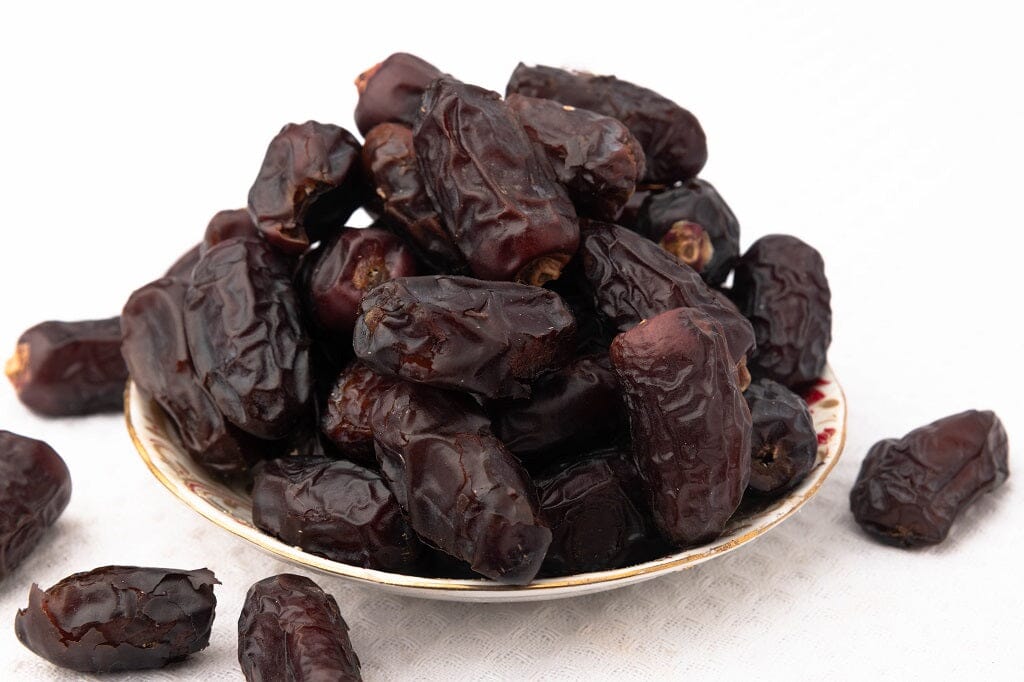
A café or bakery deciding to put dates on the menu is buying a very different quantity than a household — and the varieties that make sense change once volume enters the picture. Harga kurma at business volumes usually rewards buying the cheaper, firmer varieties for anything that gets blended or baked, and reserving Medjool only for dishes where it's served whole and visible to the customer.
Costing a menu item, not just the ingredient
A date-and-walnut muffin using date paste costs very differently per unit depending on which variety goes into the blender — Deglet Noor or a broken-grade batch works identically to Medjool once it's puréed, at a fraction of the price. A business menu-planning dates into recipes should cost the dish against the cheapest variety that still tastes right, not the most impressive-looking one on the shelf. Wholesale date pricing varies enough between grades that this decision alone can move the margin on a popular item.
Storage at scale is a different problem
A 10kg box sitting in a hot kitchen store degrades faster than the same dates split into smaller, sealed batches. Kitchens working through bulk stock over weeks should portion it down on delivery rather than opening one corner of the box repeatedly — repeated exposure to kitchen humidity is what turns a good batch sticky and clumped before it's used up.
Matching grade to how visible the date is on the plate
If a dish shows the date whole — on a dessert plate, in a garnish, on a gift platter — grade matters and it's worth paying for. If the date disappears into a batter, a smoothie base, or a sauce, grade is almost irrelevant; texture and moisture content matter more than appearance once it's blended.
Buying from a wholesaler versus a retail supplier
Ordering through a proper wholesale channel built for traders and stockists, rather than buying retail boxes repeatedly, is what makes the economics of a date-based menu item work at business volume — retail pricing per kilo assumes small, occasional purchases, not a kitchen going through the same stock weekly. A distributor supplying that channel is usually the difference between a menu item that's profitable and one that quietly loses money because nobody costed the ingredient properly.
Where to start
Cost one dish properly against wholesale pricing before adding a second — it's easy to assume dates are cheap because a single box looks affordable, and much harder to notice the margin problem once three menu items are all quietly built on the wrong grade.