
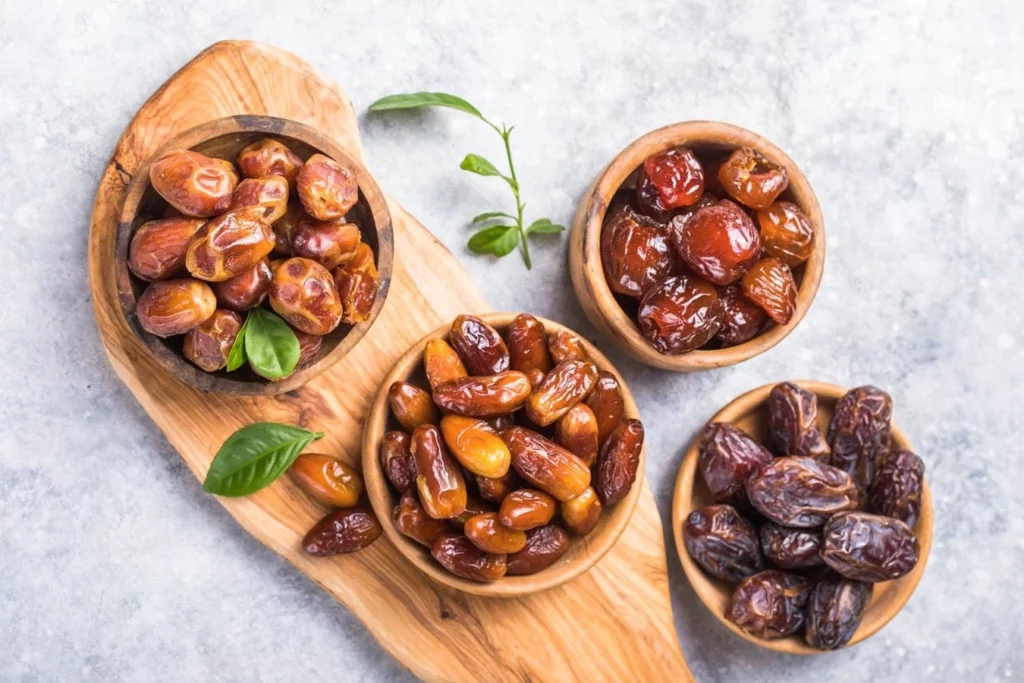
Malaysia has no shortage of dates suppliers, and most buyers pick a variety by name alone — Ajwa, Safawi, Medjool — without asking why one date feels dense and chewy while another is almost syrupy. The answer is the ripening stage the fruit was harvested and dried at, and it changes more than texture: it changes how the date behaves as a snack you reach for mid-afternoon instead of a candy bar. This piece looks at that stage-by-stage difference, then at how to actually build it into your day, with links to how modern cultivation affects the crop and where to buy from a stocked kurma supplier.
Khalal, rutab, tamr: three stages, three snacks
A date palm fruit passes through four ripening stages, but only the last three reach the table. Khalal is the crunchy, astringent early stage — rarely sold outside date-growing regions. Rutab is soft, partially ripened, moist and short shelf life; this is where Safawi is usually picked, which is why it needs refrigeration and sells out fast when fresh stock lands. Tamr is the fully ripe, sun-dried or chamber-dried stage — lower moisture, concentrated sugars, long shelf life at room temperature. Ajwa and Medjool sold in Malaysia are almost always tamr-stage.
The practical effect: a rutab-stage date releases its sweetness faster and feels lighter in the mouth, while a tamr-stage date is denser and more filling per piece. If you want something you can eat two of without feeling weighed down, rutab-leaning varieties suit that better. If you want one date to carry you through a meeting, tamr-stage density does more work.
Reading the packet before you buy
A dates supplier in Malaysia rarely labels the ripening stage directly, so texture and moisture are your signal. Squeeze gently through the packaging: give and slight stickiness usually means rutab or a wetter tamr; firmness with a matte, wrinkled skin usually means a drier tamr batch meant for longer storage. Ajwa tends to sit at the denser end — near-black skin, fudge-like bite. Medjool is deliberately kept moister and larger for a softer eat. Safawi splits: fresh-season stock is closer to rutab, older stock dries down toward tamr.
Building it into an actual routine
Two dates, once a day, works better as a habit than a vague "eat more dates" intention. Keep a drier tamr-stage variety like Ajwa at your desk — it survives a warm office without sweating or sticking together, so a small container lasts the week. Keep a moister variety like Medjool or fresh Safawi in the fridge for evenings, where the softer bite and larger size make it feel more like a treat than a snack. Pair either with a handful of nuts if you want the eating to take longer rather than being gone in two bites.
What to check with your supplier
Ask which stage the batch was picked and dried at, and how it's been stored since. A price gap between Medjool grades often comes down to exactly this — moisture content and stage at harvest, not just size. If you're comparing several varieties side by side, a texture-by-texture comparison across suppliers is worth reading before you commit to a bulk order, and the grading system behind the pricing explains why two bags of the "same" variety can cost differently.