
One quick way to judge a wholesaler is to go through their variety list with them, line by line. A supplier who actually handles the cartons can tell you where each date comes from, how it should be stored and what their grade labels mean. One who is only passing on someone else's price sheet usually can't. This guide is built around that conversation.
Every carton here is imported
Malaysia has no commercial date-growing trade, so every date sold in the country comes in from abroad. A dates wholesaler Malaysia buyers can rely on should therefore be able to name the origin of each line without looking it up. If a list mentions "local" dates, ask what that means, because it can only mean local repacking, not local fruit.
Questions to ask about the Saudi varieties
Ajwa comes from Madinah. It is a small, roundish, near-black date with finely wrinkled skin and a soft bite. "Kurma Nabi" is a market name for Ajwa, not a separate variety, so if both appear on one list as different products, ask why.
Safawi is from the Madinah region too, but it is longer than Ajwa, dark brown to black, and soft and chewy. Mabroom, also from around Madinah, is long, slender and reddish-brown, with a semi-dry, chewy texture. Sukari comes from Al-Qassim. It is golden-amber and very sweet, and it is sold either soft (rutab) or drier. A good supplier will tell you which form a given Sukari carton is. Khudri, a brown semi-dry Saudi date, is the everyday value choice.
Medjool, Iranian and North African lines
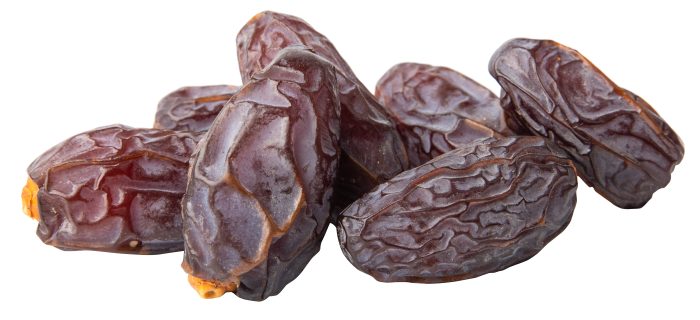
Medjool originated in Morocco, but much of the stock sold in Malaysia comes from Palestine and the Jordan Valley. It is large, very soft and tastes of caramel. Ask the supplier which country their current Medjool is from.
Mazafati, sold as "Rotab Mazafati Bam" or "kurma madu", comes from Bam in Iran's Kerman province. It is dark, very soft and moist, and it needs refrigeration. It is cold-stored and sold all year, so finding it outside the harvest months is normal. What matters is whether the wholesaler can keep it chilled from their store to your premises. Mariami and Piarom are also Iranian, both dark and semi-dry.
Deglet Noor comes from Tunisia and Algeria. It is golden, slightly translucent and semi-dry, and when it is sold still on the stem it goes by the name kurma tangkai. The stem tells you nothing about Madinah. If a seller suggests otherwise, treat their other descriptions with care too.
Grades and prices
A, AA, AAA and Jumbo are not an international standard. Each importer sorts by size in its own way, so "AA" from one supplier may not match "AA" from another. Ask what each grade means on their list, and ask for a sample carton before committing to a full order. Our wholesale price guide lists rates for a diverse selection of date varieties, which gives you a reference point for their quotes. Read how date grading works in Malaysia before you compare grade against grade.
Planning a bulk order
Demand peaks before and during Ramadan, with further rushes around Hari Raya, wedding hantaran, kenduri and umrah gifts. Most Gulf and Middle-East dates are harvested from late summer into autumn, and new-season stock lands here some weeks later. If you need a large supply of dates for the fasting month, book it early and confirm in writing which varieties, grades and carton sizes you will receive.
If this is your first wholesale order, our guide to choosing varieties for a first wholesale order goes through the mix in more detail.