
If a real magic pill for fat loss existed, it would show up in the best-run trials. So this article reads the supplement shelf one label at a time, using a 2021 systematic review that sorted the evidence for each product. Then it turns to an ordinary food with its numbers on record: dates.
The review behind this list
Batsis and colleagues searched five research databases and screened 20,504 citations. They ended up with 315 randomised controlled trials covering 14 supplements, therapies or combinations. Only 52 of those trials were rated low risk of bias and sufficient to judge whether the product worked. Of the 52, just 16 showed a significant difference in weight between groups, ranging from 0.3 to 4.93 kg (PubMed 34159755). The authors note that these products are sold as a panacea because the rules for proving they work are minimal.
Below are seven of the labels they checked, with the counts from the full text of the review.
Green tea
Green tea had the most trials of anything on this list: 38. Sixteen were rated low risk of bias. Only two of those sixteen showed a statistically significant drop in weight, of 1.5 to 1.7 kg, and both ran for less than 8 weeks.
Garcinia and hydroxycitrate
Garcinia is a plant native to India and Southeast Asia, and its rind contains hydroxycitric acid. The review found 15 trials. Four were rated low risk of bias. Two of the four reported significant losses of 1.3 to 3.6 kg, and the other two found nothing significant.
Chromium and calcium with vitamin D
Chromium had six trials, half of them low risk of bias. One of those three showed a significant loss, 1.4 kg with 400 µg of chromium over 72 days. Calcium with vitamin D had 22 trials, and five were low risk of bias. None of the five showed a significant difference in weight change between groups.
CLA and chitosan
Conjugated linoleic acid, or CLA, is a fatty acid found naturally in dairy and meat. It had 31 trials, five of them low risk of bias, and one of those five showed a significant loss of 1.5 to 3.0 kg. Chitosan, which is extracted from the shells of crustaceans such as shellfish, had nine trials. Only one was low risk of bias, and it showed a 2.3 kg difference over 6 weeks.
Guar gum, a fibre sold for weight loss
Guar gum is a dietary fibre from the seeds of the Cyamopsis tetragonolobus plant, also used as a thickener in baked goods. It is sold on the idea that it bulks up in the gut and keeps you full for longer. The review found five trials, and none of them was rated low risk of bias. So for this product there is no well-run trial to judge it by at all.
Herbal blends
A separate 2020 review by Maunder and colleagues looked at herbal products and identified 54 placebo-controlled trials. Among herbs with at least four trials to pool, only white kidney bean extract (Phaseolus vulgaris), taken on its own, gave a statistically significant loss, and it still fell short of the 2.5 kg the authors counted as clinically significant. Camellia sinensis, the plant green tea is made from, and Garcinia cambogia showed no effect in that analysis. Their conclusion was that there is currently insufficient evidence to recommend any of the herbal medicines in their review for weight loss (PubMed 31984610).
What the shelf adds up to
Read label by label, the best trials show losses of a few kilograms at most, many show nothing, and some products have no reliable trial at all. That fits the review's own conclusion: supplements and alternative therapies for weight loss have a limited high-quality evidence base.
Fibre from food, with dates on the plate
Fibre from ordinary food does have a target. The NHS says our dietary fibre intake should increase to 30g a day, and that most adults eat an average of about 20g. It calls foods with 6g or more of fibre in every 100g high-fibre foods. Its tips include fresh or dried fruit for dessert, but because dried fruit is sticky it is better eaten as part of a meal than as a between-meal snack.
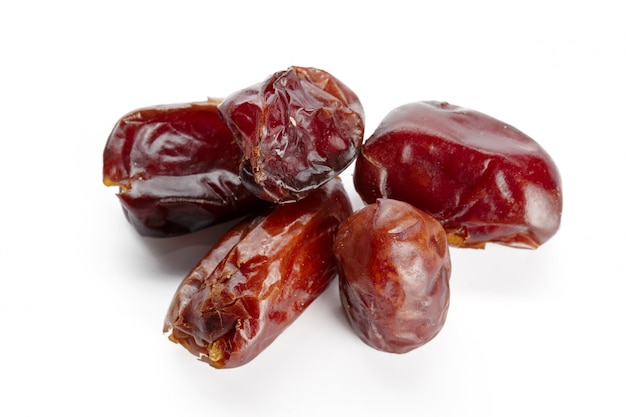
Dates clear that 6g bar. USDA FoodData Central (SR Legacy record 171726) lists Deglet Noor dates at 8.0 g of fibre and 282 kcal per 100g. The NHS counts a 30g portion of dried fruit, and it names dates, as 1 of your 5 A Day, eaten at mealtimes. That 30g works out to about 2.4 g of fibre and 85 kcal. It is no magic pill either, just a food whose fibre and energy are measured. The NHS weight-loss tips add two simple rules that work with it: do not skip meals, and do not stock unhealthy food, since fruit is one of the healthier alternatives it names.
Buying dates
Pembekal Kurma Selangor is a supplier site that lists Ajwa, Medjool, Safawi, Mazafati and Mariami. Kurma Borong Malaysia's about us page says it covers retail buyers through to wholesale supply and delivers across the country. Its contact page gives the WhatsApp number for questions, quotes and orders, and more date articles are on the blog.
This article is general reading, not personal advice. The NHS says anyone with a medical condition, a special diet for their health or an eating disorder should talk to a GP or a healthcare professional before making changes to their lifestyle.