
"Dwarf hamster" is a pet-shop label, but the animals behind it belong to one genus, Phodopus, with three species: Campbell's (P. campbelli), the Djungarian (P. sungorus) and the Roborovski (P. roborovskii). A 2015 study from Martin Luther University Halle-Wittenberg describes them as animals of the steppes, semi-deserts and deserts of continental Asia, where the climate swings hard from day to night and from season to season. The RSPCA names Campbell's Russian dwarf, the winter white dwarf and Roborovski's dwarf among the five hamsters most commonly kept as pets. The description below comes from lab and field research. The care advice after it comes from the RSPCA.
How the three dwarf species differ from each other
The Halle team kept all three species for a year under natural light and temperature and checked them every one to two weeks. Body mass was high in summer and low in winter. The change was biggest in the Djungarian and smallest in the Roborovski. Only the Djungarians changed fur colour. The hamsters that responded to the short winter days went into regular bouts of torpor, a temporary drop in body temperature, but the Roborovskis did not show these bouts in that study.
Temperament splits the genus too. Two studies from Japanese universities compared the Djungarian and the Roborovski directly. The 2017 paper calls the Djungarian tame and calm and the Roborovski not tame, with much higher locomotor activity. On memory tests the two did not differ significantly, though the Roborovskis showed lower learning ability. A 2023 follow-up found that Roborovskis also burned more energy in the dark, and when food was taken away they moved around a lot looking for it, while the Djungarians kept their energy use fairly constant.
A 2016 paper from the Chinese Academy of Sciences gives the desert hamster, as the Roborovski is also called, a weight of about 20 grams. It had been described as keeping a steady body temperature, yet the team found that fasted Roborovskis could slip into shallow daily torpor. Food shortage was the main trigger.
What wild Roborovskis do at night
Researchers from the University of Stuttgart tagged wild Roborovskis in the Alashan desert of Inner Mongolia, China, across three summers, with readers at the burrow entrances. The hamsters stayed above ground longer as the visible moon grew, and their foraging walks lasted longer. Higher air and soil temperatures shortened their activity. A 2024 comparison of hunting in five hamster species found the Roborovski's hunting the most variable of the group and called it the most advanced hunter in its genus.
Care that suits a dwarf hamster's nature
The RSPCA says wild hamsters are usually active only at dusk and at night and can run up to five miles a day. That matters for any hamster, and more so for a Roborovski, which was far more active than the Djungarian in the Japanese studies. The charity asks for a good-quality wheel with a large diameter, such as one made for rats, solid and axle-free, ideally with a non-slip surface, and it says a wheel should not be the only enrichment. Keep the room's lights going off at about the same time each night.
Handling takes patience, especially with a species the 2017 paper calls not tame. The RSPCA says to let a hamster investigate your hands in its own time, to pick it up by cupping it in two hands, and to hold it no more than a few inches above a stable surface such as a table. It also says not to handle a hamster that is resting or asleep unless you have to.
The home should work like a burrow. The RSPCA prefers plastic cages to metal ones, says wooden cages should not be used, and wants a solid floor with bedding deep enough to dig in. Dust-free wood shavings or granulated corn cob are its compromise for a digging layer. Good nesting materials are hay, wood wool, shredded paper or cardboard. Avoid fluffy cotton-wool-type bedding, because the thin strands can tangle a hamster's limbs. Hamsters are sensitive to high-frequency sounds we cannot hear, so keep the cage away from televisions, computer screens, vacuum cleaners and running water.
The research above shows dwarf hamsters can go into torpor when days shorten or food runs short. The RSPCA wants pet hamsters kept indoors partly to prevent this, because domestic hamsters do not have enough fat reserves to go without food for long. If one does seem to have gone into hibernation, it says to keep the hamster somewhere warm but not too hot, with fresh food, water and nesting material, to check it regularly, and to contact a vet if you are unsure.
Dwarfs are the hamsters that can sometimes share a cage. The RSPCA says Roborovski, Campbell's and winter white dwarfs can live in pairs or trios if the group forms early in life and stays stable, ideally young litter mates. It adds that even dwarfs do not need company to be happy, and that pairs may fall out later, so be ready to house them apart. A shared cage needs one more hiding place than there are hamsters. Hamsters do not play-fight, so any fight means separating them for good.
Food, and where dates fit
In the wild, the RSPCA says, hamsters eat seeds, cereals, insect larvae and larger insects such as crickets, which fits the hunting study. Pets need a compound pellet ration or a seed mixture, plus small quantities of greens, cleaned root vegetables and pieces of fruit such as apples. Never give grapes or rhubarb, which can be poisonous to rodents. Water should come from a bottle with a valveless sipper tube, and scattering or hiding some food encourages foraging.
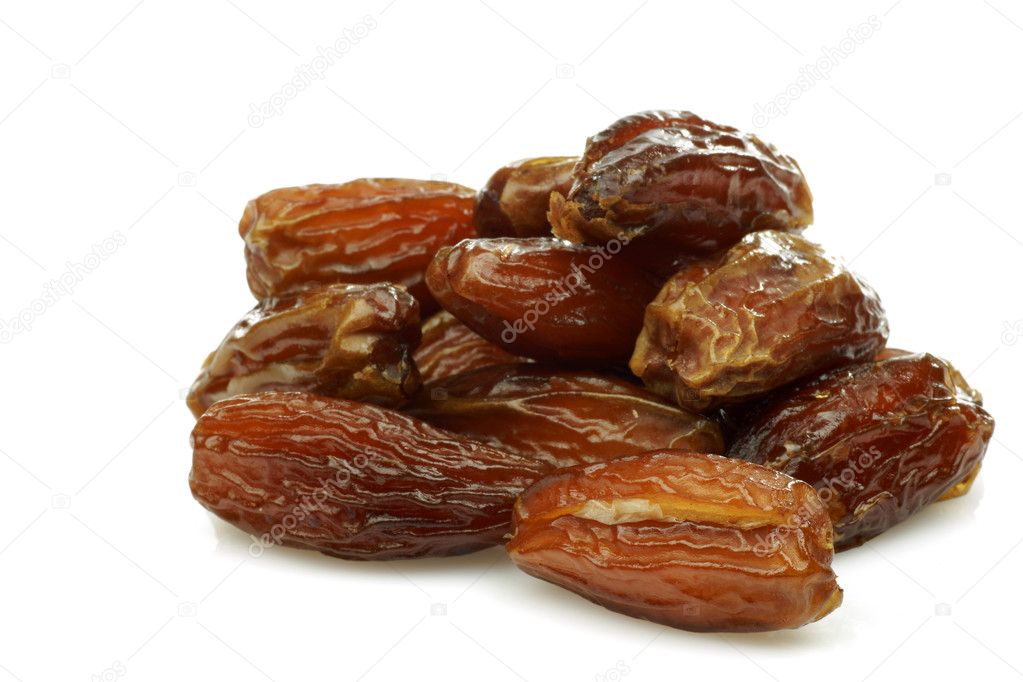
Dates are not named on the RSPCA list. A Medjool date is far sweeter than the fruit the RSPCA does name. USDA FoodData Central lists 66.5g of total sugars per 100g for Medjool dates, against 10.4g for raw apples with skin, about six times as much. For an animal that may weigh around 20 grams, ask a vet before offering any. If you keep dates at home, perhaps from a seller such as Pemborong Kurma Green Diamond, keep them for yourself unless the vet says otherwise.
About this site
Kurma Borong Malaysia is a dates site, and this hamster guide is a side trip. Its about page describes everything from retail buys to wholesale supply, delivered across the country. Questions, quotes and orders go through WhatsApp, with the number on the contact page. Other articles are on the Kurma Borong blog.